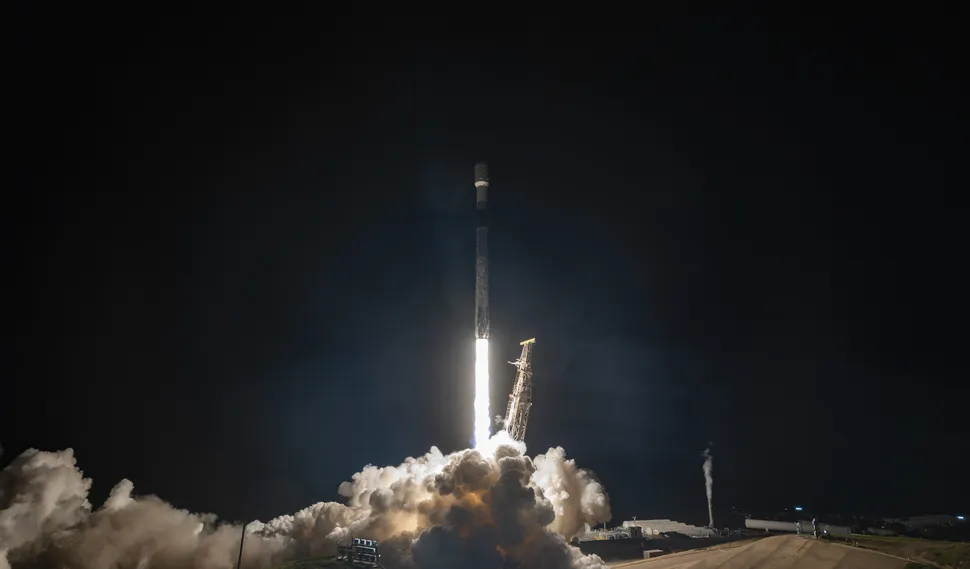
NASA’s upcoming exoplanet research mission has officially begun its journey into space. SpaceX successfully launched the Pandora exoplanet satellite as part of a major rideshare mission that also carried nearly 40 additional payloads.
A Falcon 9 rocket lifted off from Vandenberg Space Force Base in California on Sunday, January 11, at 8:44 a.m. Eastern Time. The launch occurred in the early morning hours locally and placed all payloads into their planned trajectories.
SpaceX designated the flight as the “Twilight” mission. The name reflects the dusk-dawn sun-synchronous orbit used for deployment, which follows the boundary between Earth’s night and day. Satellite separation proceeded as scheduled over a 90-minute window that began roughly one hour after liftoff.
The centerpiece of the mission was NASA’s Pandora exoplanet satellite. Weighing about 716 pounds, or 325 kilograms, Pandora will operate in orbit for at least one year. During that time, it will observe a minimum of 20 previously identified exoplanets.
Pandora is equipped with a 17-inch-wide telescope designed to monitor planets as they transit their host stars. These transits create subtle dips in starlight, a technique that has enabled astronomers to identify the majority of known exoplanets.
Beyond detection, transit observations allow scientists to study exoplanet atmospheres. As starlight passes through an atmosphere, specific wavelengths are absorbed by different molecules. This process provides insight into atmospheric composition.
Stellar variability complicates such measurements. Star surfaces are not uniform and often display regions of varying brightness, similar to sunspots. These features can interfere with atmospheric analysis if not properly accounted for.
Pandora aims to address this challenge by observing host stars in visible light while collecting infrared data at the same time. According to NASA, this dual approach will help separate stellar signals from planetary spectra with greater precision.
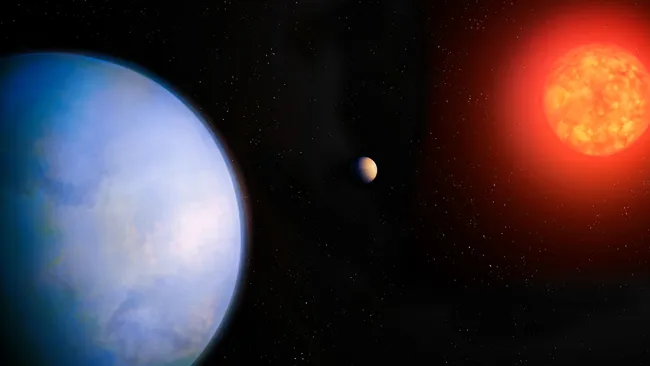
The mission will concentrate on exoplanets whose atmospheres are dominated by water vapor or hydrogen. These targets are considered especially valuable for understanding planetary formation and atmospheric behavior.
In addition to Pandora, the Twilight mission carried a wide range of commercial and experimental satellites. Among them were 10 Aether spacecraft from Kepler Communications and two advanced Acadia radar satellites developed by Capella Space.
SpaceX has extensive experience with rideshare launches. The company has completed 15 missions under its Transporter program and four additional flights through its Bandwagon initiative.
The Falcon 9 booster used for the Twilight mission returned safely to Vandenberg approximately 8.5 minutes after launch. According to SpaceX, this marked the fifth flight for that specific first-stage booster.