Astronomy Day 2025 is here! To celebrate, six spectacular night sky targets have been selected to highlight the variety and scale of cosmic wonders, whether seen with the naked eye or through a telescope.
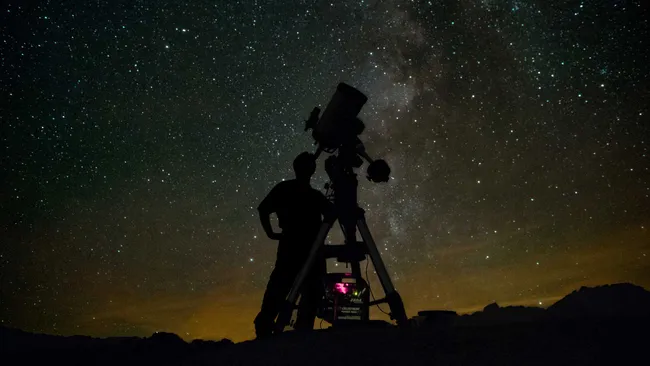
The American Astronomical League chooses one night each spring and fall for enthusiasts to bring astronomy “to the people” by holding stargazing events. This year, Astronomy Day falls on Sept. 27. Check the Astronomical League’s website to find your local clubs, or simply point your eyes, telescope, or binoculars skyward to hunt these six celestial treasures.
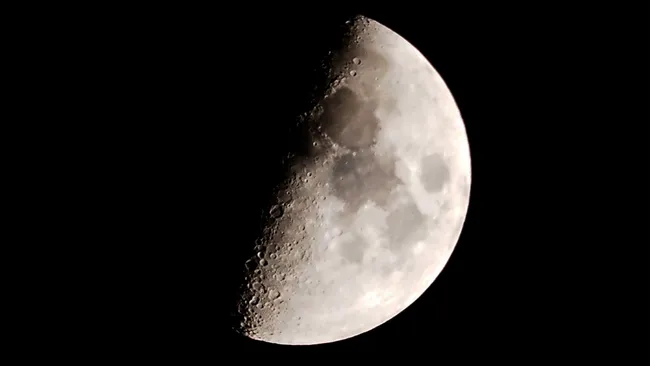
- The Moon — diameter: 2,159 miles (3,475 km)
The 34%-lit lunar disk will be visible 15 degrees above the southwestern horizon at sunset. A telescope reveals Mare Tranquilitatis and even the Apollo 11 landing site using craters Ritter, Sabine, and Moltke as guides. - Saturn — diameter: 74,897 miles (120,500 km)
Shining in Pisces, Saturn will appear bright to the naked eye. A telescope shows its cloud bands and iconic rings, though currently nearly edge-on. Don’t miss Titan casting its shadow on Oct. 6. - Polaris — size: 46 suns
The famous North Star lies in Ursa Minor, 430 light-years away. Located using the Big Dipper, Polaris marks the axis around which the Northern Hemisphere’s night sky appears to rotate. - Orion Nebula — diameter: 30 light-years
This stellar nursery, also called Messier 42, lies 1,500 light-years away. Found beneath Orion’s Belt, it’s a birthplace of stars and planetary systems, studied by Hubble and James Webb. - Pleiades Star Cluster — diameter: 43 light-years
Also known as the Seven Sisters, this stellar city contains over 1,000 stars. Visible in Taurus above Aldebaran, binoculars reveal dozens of young, energetic stars. - The Milky Way
From a dark-sky site, the galaxy appears as a dense ribbon of stars. The glowing band runs through the Summer Triangle — Altair, Vega, and Deneb. It’s a majestic sight for stargazers and photographers alike.
These highlights only scratch the surface of the cosmos. Celebrate Astronomy Day 2025 by exploring the sky and checking monthly maps to stay updated on celestial events.