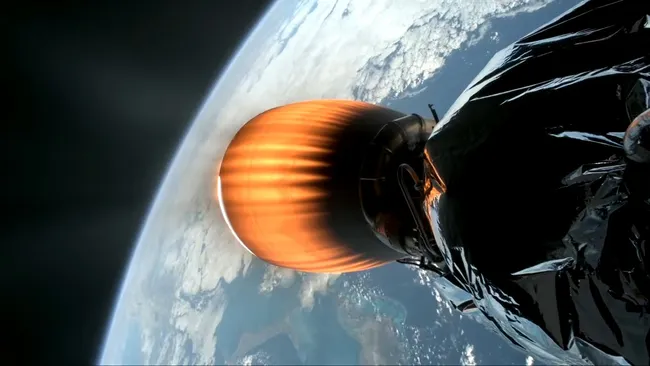
SpaceX once again set a new benchmark in the global space industry by breaking its own annual rocket launch record in 2025. The company continued a six-year streak of record-setting performance, pushing its launch cadence to unprecedented levels.
The progression of SpaceX’s annual orbital launches highlights the scale of this growth. The total rose from 25 launches in 2020 to 31 in 2021, then jumped to 61 in 2022. The pace accelerated further with 96 missions in 2023, 134 in 2024, and ultimately reached 165 orbital launches in 2025.
This figure does not include five additional suborbital Starship test flights conducted during the year. With launches occurring at a rate of nearly one every two days, SpaceX outpaced not only commercial competitors but also national space programs.
In 2025, SpaceX conducted almost twice as many orbital launches as China. The company’s missions accounted for roughly 85 percent of all United States orbital launches during the year.
All 165 orbital missions were carried out using the Falcon 9 rocket. The vehicle’s reusable first stage remained central to SpaceX’s high-frequency launch strategy. Falcon Heavy did not fly during 2025, with its most recent mission having taken place in October 2024.
Of the 165 Falcon 9 launches, boosters successfully returned for landing in all but three cases. Two non-recoveries occurred during missions in January and October that delivered large Spainsat NG communications satellites to geostationary transfer orbit. These missions required heavy lift performance, leaving insufficient fuel for booster recovery.
The remaining exception involved a failed landing attempt during a March 3 Starlink mission. Although the booster initially touched down on an ocean drone ship, a fire near its base damaged a landing leg and caused the vehicle to tip over.
Starlink deployments dominated SpaceX’s launch schedule throughout the year. A total of 123 Falcon 9 missions were dedicated to expanding the Starlink megaconstellation. These launches placed more than 3,000 satellites into orbit, bringing the active Starlink fleet to over 9,300 spacecraft.
Beyond launch volume, SpaceX achieved several additional milestones in 2025. The company completed its 500th rocket landing and also marked the 500th launch of a previously flown booster. Another record was extended repeatedly, with a single Falcon 9 booster reaching a total of 32 launches.
SpaceX’s activities in 2025 were not limited to Falcon 9. The company also carried out five suborbital test flights of Starship, the fully reusable rocket system designed for deep-space missions. During the first three flights of the year, at least one stage was lost on each attempt.
The final two Starship test flights, conducted in August and October, achieved full mission success. These results marked a significant step forward for the program after earlier setbacks.
Looking ahead, SpaceX is expected to increase Starship activity in 2026. Plans include the vehicle’s first orbital flight and the possibility of an uncrewed mission toward Mars, contingent on continued technical success.
An earlier report misstated the total number of orbital launches in 2025. The correct figure, based on company records, stands at 165 launches.