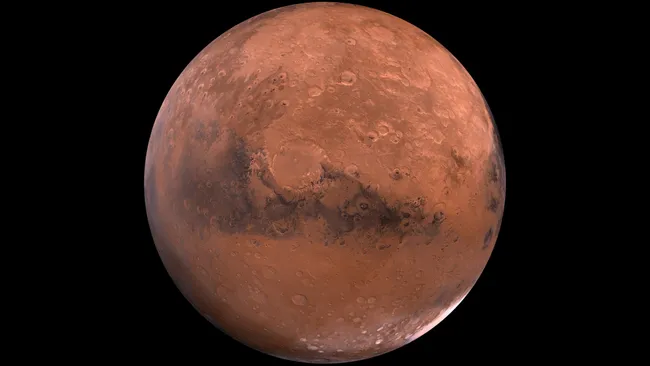
Time travels faster on Mars than on Earth, with time passing, on average, 477 millionths of a second faster per day on Mars than on Earth. This disparity is a direct consequence of Albert Einstein’s theory of general relativity and will have implications for future navigation and communication networks spanning the inner solar system.
The General Relativity Effect
Neil Ashby and Bijunath Patla of the U.S. National Institute of Standards and Technology (NIST) calculated this time discrepancy by factoring in several variables:
- The strength of gravity on Mars (five times weaker than Earth’s).
- The velocity and eccentricity of the Red Planet’s orbit.
- The gravitational influence of the Sun, Earth, and our Moon.
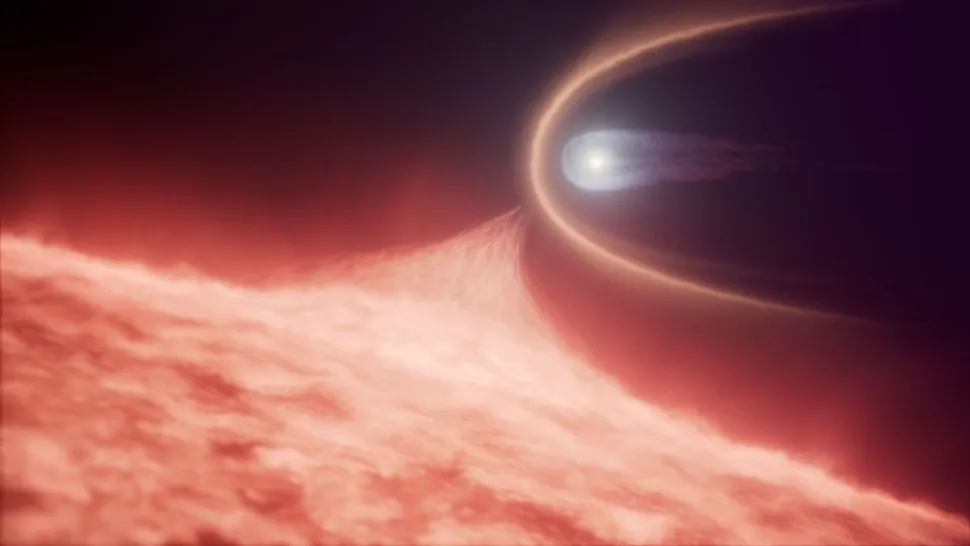
Einstein’s theory of general relativity describes Time dilation—how clocks can appear to run faster or slower depending on their frame of reference, which is governed by velocity and the strength of the gravitational field. Time passes slower near strong gravity (like a black hole) or when moving near the speed of light.
Since Mars is farther from the Sun than Earth, the Sun’s gravitational field is slightly weaker at Mars’ orbit, causing Martian clocks to tick fractionally faster relative to Earth clocks.
“Their [Mars’] distance from the sun and its eccentric orbit make the variations in time larger,” said Patla, noting that the calculation was a complex four-body problem involving the Sun, Earth, the Moon, and Mars.
Implications for Future Space Networks
While the average difference is 477 microseconds per day, this rate can fluctuate by as much as 226 microseconds depending on Mars’ position in its eccentric orbit.
Though not as dramatic as time dilation near a black hole, this difference is significant enough to potentially disrupt future Mars-Earth navigation and communication networks. For instance, 5G technology requires accuracy within a tenth of a microsecond.
Knowing this discrepancy is vital for synchronizing networks on both planets (accounting for the light travel time), ensuring efficient data transmission. Ashby emphasized the need to study these issues now, noting that future global navigation systems, like GPS, will depend on accurate clocks and General Relativity.
Ashby and Patla previously calculated that clocks on the Moon tick 56 microseconds faster than those on Earth.