NASA has officially completed the full assembly of its next-generation space observatory, the Nancy Grace Roman Space Telescope. The mission now enters its final phase of launch preparations, potentially setting the stage for an earlier-than-expected liftoff.
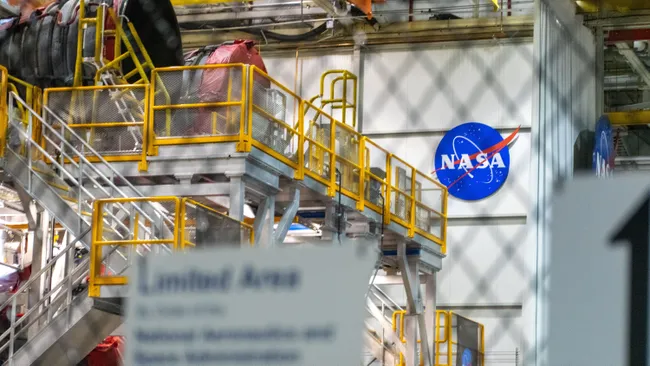
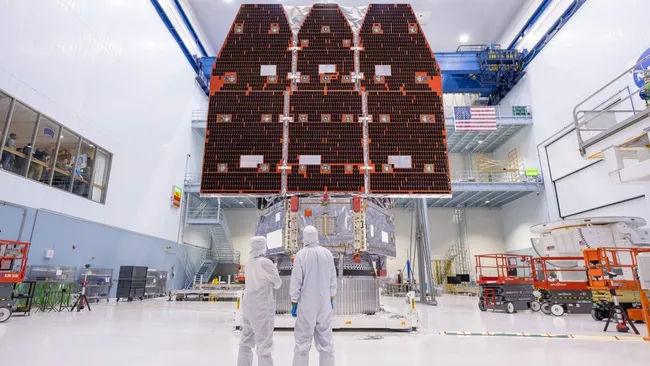
The final integration of the Roman Space Telescope’s main observatory components was completed on November 25 inside NASA’s Goddard Space Flight Center in Greenbelt, Maryland. Engineers successfully joined the spacecraft and telescope assemblies inside the facility’s largest clean room, according to an official NASA statement.
“Completing the Roman observatory brings us to a defining moment for the agency,” said Amit Kshatriya, NASA Associate Administrator. He emphasized that the mission represents years of rigorous engineering work performed through a disciplined and highly detailed testing process. As Roman enters its last phase of verification, the focus now shifts to precise execution ahead of launch.
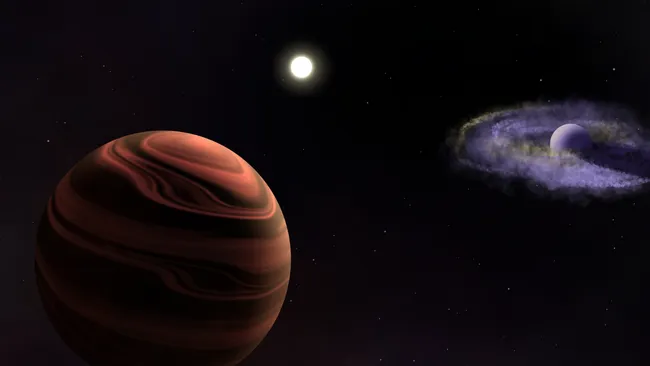
The Roman Space Telescope is designed to explore the universe with unprecedented efficiency. It carries two primary instruments. The first is the Wide Field Instrument, a powerful infrared camera with a field of view significantly larger than that of the Hubble Space Telescope at a similar resolution. The second is a next-generation Coronagraph that will block light from distant stars, allowing scientists to directly image planets that orbit them.
Together, these instruments are expected to map large-scale cosmic structures, investigate the nature of dark energy, measure the distribution of dark matter, detect isolated black holes through microlensing, and identify tens of thousands of distant exoplanets.
With physical construction now complete, the Roman Space Telescope moves into an extensive series of environmental and performance tests. These simulations are designed to ensure the spacecraft can withstand the extreme stresses of launch and operate reliably in space. After testing concludes, the telescope is scheduled to be shipped to NASA’s Kennedy Space Center in Florida this summer for final processing and launch integration.
Although the official launch target remains May 2027, NASA officials confirmed that the Roman mission could potentially be ready as early as fall 2026.
If everything proceeds according to plan, Roman will launch aboard a SpaceX Falcon Heavy rocket. The telescope will be placed into a gravitationally stable orbit around the sun nearly one million miles from Earth. During its planned five-year primary mission, Roman is expected to observe billions of galaxies and hundreds of millions of stars.
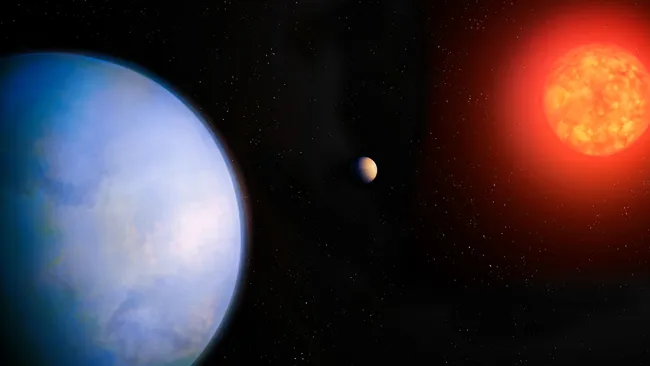
Mission scientists project that the telescope will detect more than 100,000 exoplanets by monitoring subtle gravitational lensing events. This technique captures the brief magnification of distant objects when a massive foreground object bends light passing behind it.
“With Roman’s construction complete, we are poised at the brink of unfathomable scientific discovery,” said Julie McEnery, Roman’s senior project scientist at NASA Goddard. She added that the mission is expected to deliver enormous volumes of new data about the universe at an unprecedented pace once it launches.