How NASA changed in 2025 has become a serious question as the agency faced budget cuts, workforce reductions, and threats to long-standing science missions. For an organization aiming for the Moon and Mars, the past year brought turbulence that may leave lasting consequences.
Throughout 2025, NASA experienced proposed funding reductions, large-scale layoffs, and the elimination of several internal offices. These pressures triggered concern over whether the agency’s structure and mission focus have been altered in a permanent way. Political debate now surrounds NASA’s long-term stability and direction.
According to Henry Hertzfeld, a research professor of space policy at George Washington University, the agency has already changed in fundamental ways. He noted that many highly experienced employees with deep institutional knowledge are no longer at NASA. While some may have retired naturally, the scale of departures signals a deeper transformation.
Hertzfeld also pointed to the elimination of NASA’s policy office. With that decision, expertise in economics and policy analysis disappeared from internal decision-making processes. He argued that the loss of this talent weakens the agency’s ability to evaluate programs and guide strategic choices.
Long-Term Impact on Science
One of the most significant consequences of how NASA changed in 2025 involves science programs. Hertzfeld warned that without congressional action, science will bear the greatest losses. Fewer new initiatives are expected, along with widespread reductions in ongoing research.
Although NASA’s science division represents a smaller portion of the agency, it has historically produced critical discoveries and data. Hertzfeld stressed that losing scientists now will create long-term damage. Recruiting and retaining highly skilled researchers will become more difficult, as many will seek opportunities outside government.
Shift in Investment Priorities
Another major change involves funding dynamics within the space sector. Hertzfeld explained that growth in private space investment is increasingly driven by defense and security spending. The Department of Defense, rather than NASA, now leads demand for commercial space services.
As a result, innovation may increasingly favor military and security objectives. Civil space programs could receive fewer benefits from new technologies. This shift marks a departure from past decades when NASA acted as the primary engine for commercial space development.
Growing Concerns at NASA Centers
Keith Cowing, founder of NASA Watch, highlighted severe impacts at NASA’s Goddard Space Flight Center. He noted that while workforce reductions affected every NASA center, Goddard faced particularly deep cuts. Around 20 percent of staff were lost, and nearly half of its facilities may be mothballed.
A long-term modernization plan for Goddard was accelerated and expanded by NASA Headquarters. This move prompted scrutiny from congressional committees, which requested explanations from the agency. Delays in response further raised concerns over the future of NASA science programs.
Morale and Leadership Challenges
Marcia Smith, founder of SpacePolicyOnline.com, emphasized the human cost of NASA layoffs. Nearly 4,000 employees left the agency, many of whom were highly respected experts. While capable staff remain, executing remaining programs with reduced personnel will be difficult.
Smith also described morale as one of the most severe casualties. Employees who devoted their careers to American space leadership were told their work could be eliminated through budget decisions. She cited the Department of Government Efficiency, or DOGE, as a key driver of these reductions.
Years Needed to Recover
Jack Kiraly of the Planetary Society described 2025 as a profound shock for NASA. The civil servant workforce is now smaller than it was in 1961. The loss of expertise and institutional memory will take years to rebuild.
Kiraly added that canceled NASA awards and reduced research funding disrupted the STEM pipeline nationwide. Because NASA supports projects across most congressional districts, the impact extends beyond the agency itself.
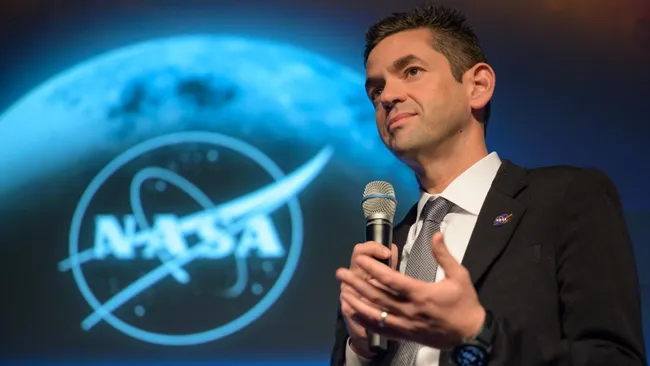
Despite the damage, Kiraly said recovery remains possible. Congress has signaled bipartisan support to restore NASA funding in 2026. The confirmation of Jared Isaacman as NASA Administrator may also provide new leadership at a pivotal moment.
How NASA changed in 2025 reflects more than temporary disruption. The decisions made now will determine whether the agency regains its strength or enters a fundamentally different era in space exploration.