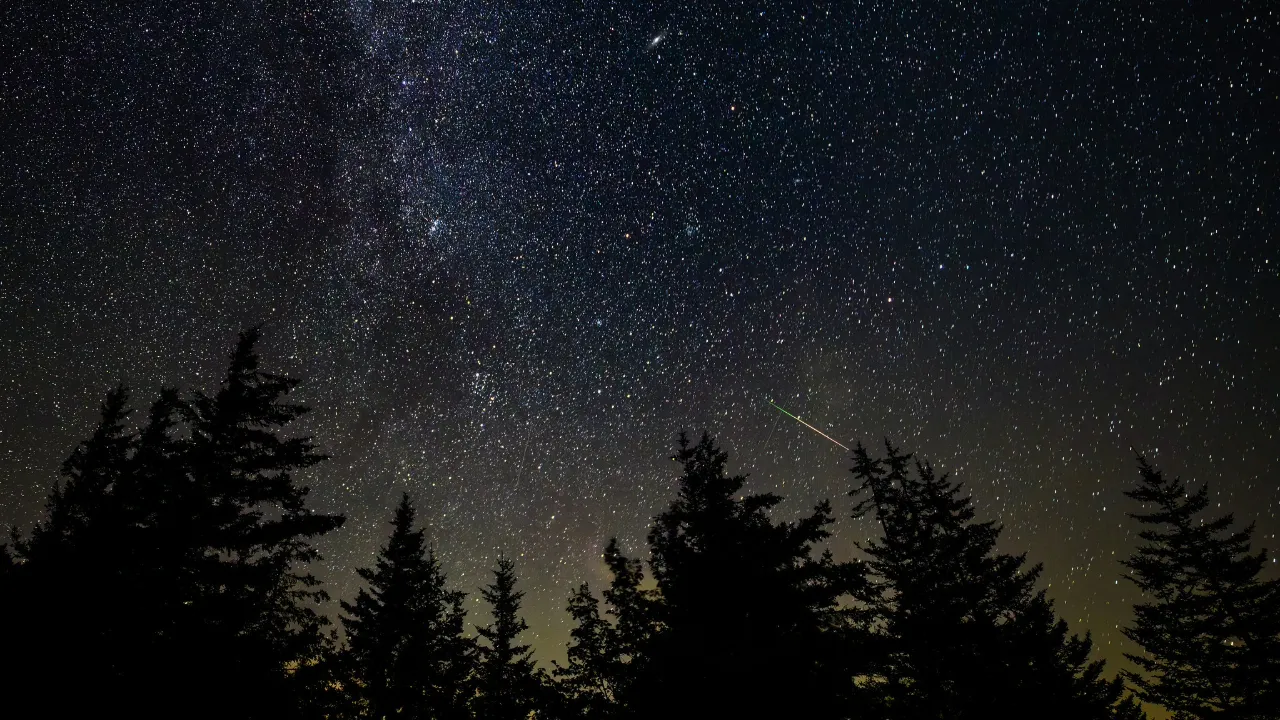
A dazzling meteor lit up the skies over West Virginia on the night of August 3, 2025, offering stargazers a rare spectacle. Captured by NASA photographer Bill Ingalls, the meteor appeared during a rare overlap between the Perseid and Alpha Capricornid meteor showers.
The photo, taken at Spruce Knob, a remote mountaintop in West Virginia, highlights a pristine view of the night sky with minimal light pollution. This made the conditions perfect for viewing meteor activity and catching a glimpse of a shooting star over West Virginia.
Meteors are created when Earth passes through debris trails left by comets. Even fragments as small as grains of sand can burn brightly upon hitting Earth’s atmosphere, producing the brilliant flashes we call meteors.
While meteor showers happen year-round, some like the Perseid meteor shower are more anticipated due to their intensity. The Perseids, caused by the comet Swift-Tuttle, are known for their fast-moving, bright trails. Meanwhile, the Alpha Capricornid meteor shower, which stems from debris from comet-like object 169P/NEAT, produces slower meteors but is notable for its occasional fireballs.
What makes this photo even more remarkable is its timing. Ingalls managed to capture the event during the brief window when both the Perseids and Alpha Capricornids were active, an overlap that doesn’t always happen with such visual clarity.
For those chasing the stars, NASA’s photo of a meteor over West Virginia serves as a reminder of the wonder above us. As August continues, clear skies and dark locations remain key for witnessing the height of the meteor season.